Expertise Areas.
Business & Entrepreneurship
This year taught me how much Business and Design overlap, especially the strength of team thinking within an organisation. Stepping up to head Business and Finance for Team IGNITE, I acted as the bridge between corporate partners, professionals, and our student team. Coordinating with lighting partner Zumtobel on our project TALE, a hospital lighting redesign, was especially challenging: with separate companies handling the lights, software, and hardware, documentation and progress stalled under the bureaucracy. This taught me that a real design process follows the beliefs of everyone involved as much as the artistic or technical ideation itself, and managing opinions is a crucial skill. I learned this same discipline on a technical level too, reflected in the Technology & Realisation expertise area.
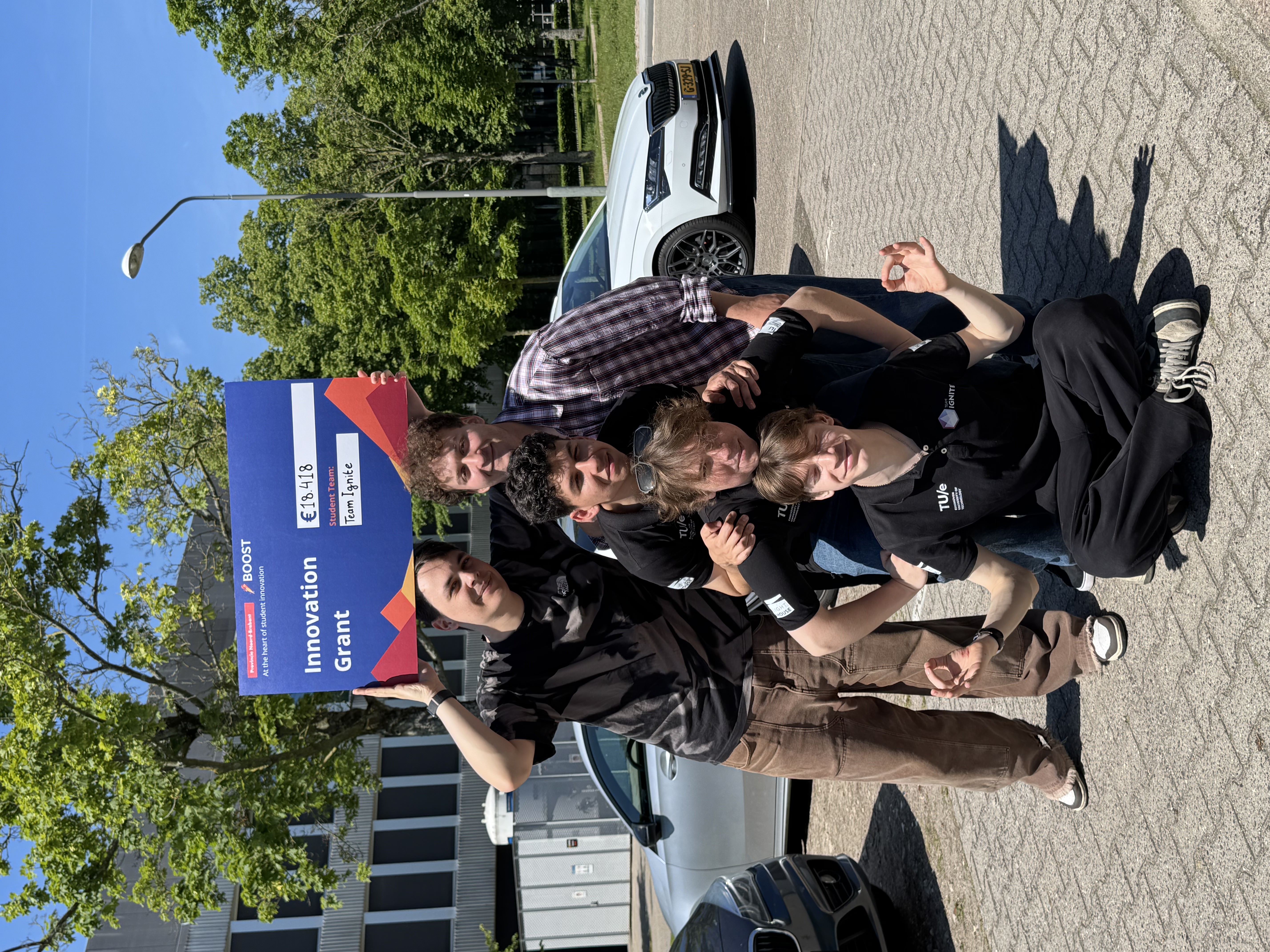
IGNITE Board #5
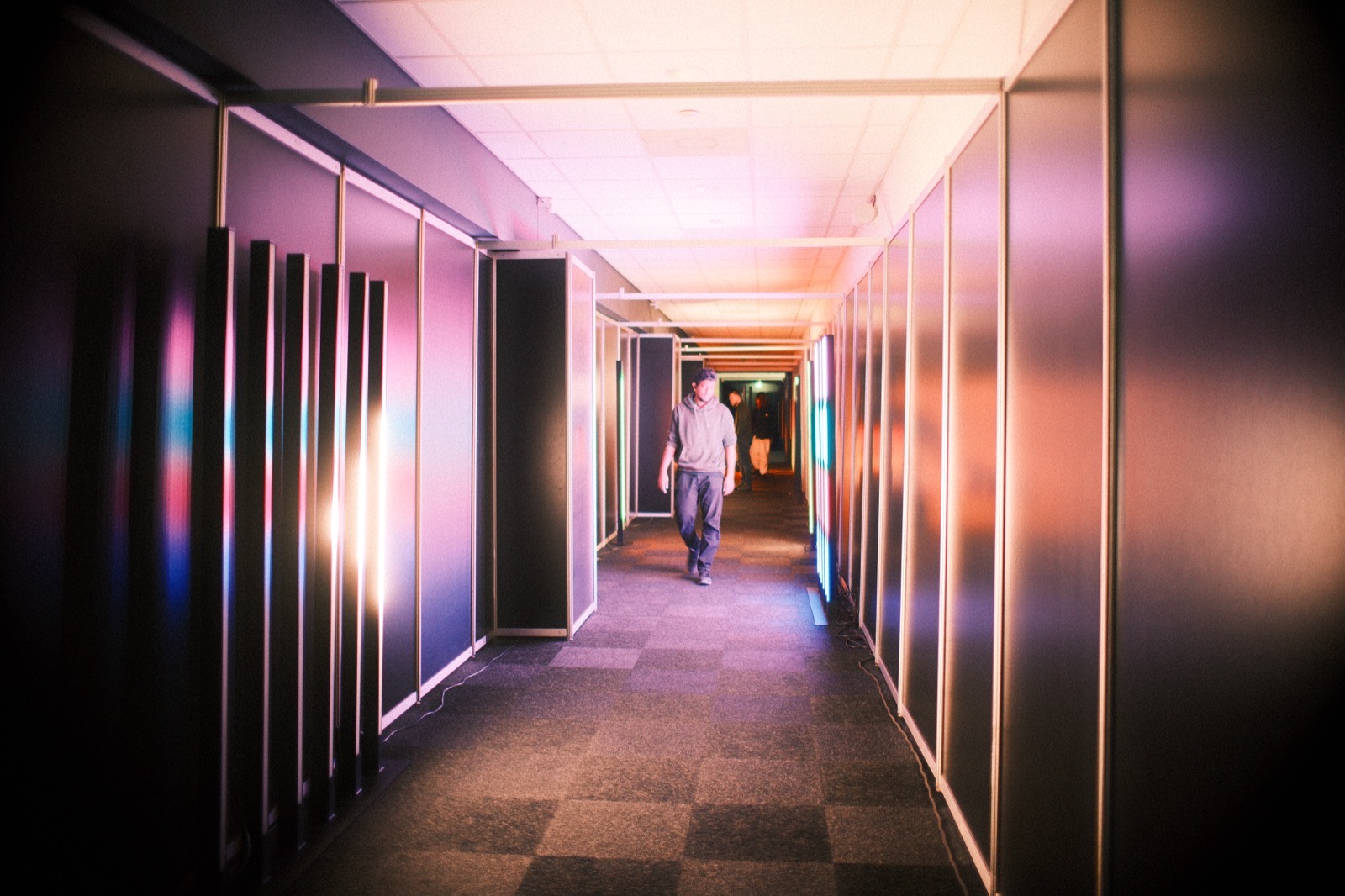
IGNITE Project TALE with partner Zumtobel
Technology & Realisation
In CBL3, I worked with high-voltage electronics, learning to use transistors and MOSFETs to calculate the current for each tile. But the hardest part of working with technology is communication: words, ideas, and drawings rarely align. I struggled to discuss technical ideas without ego, especially on Pulse Drive, where I had to set that ego aside and ask electrical engineering friends for help with the MOSFETs. That communication matters both ways, whether I'm the less experienced or more experienced person in the room, and it's a skill I'm still building. That same willingness to set my ego aside now shows up in reverse in the Math, Data & Computing expertise area, where I'm the one teaching.
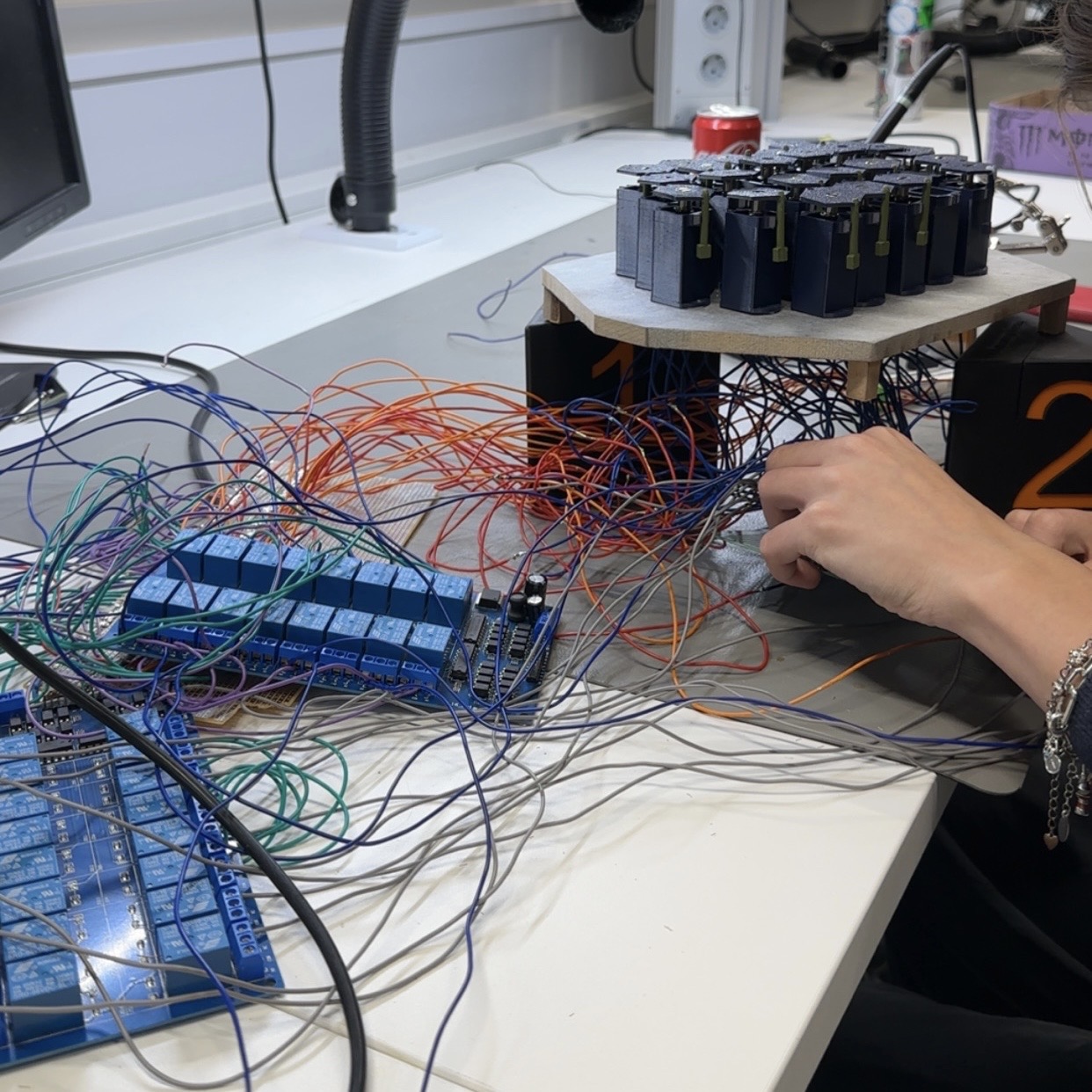
Electronics of PulseDrive
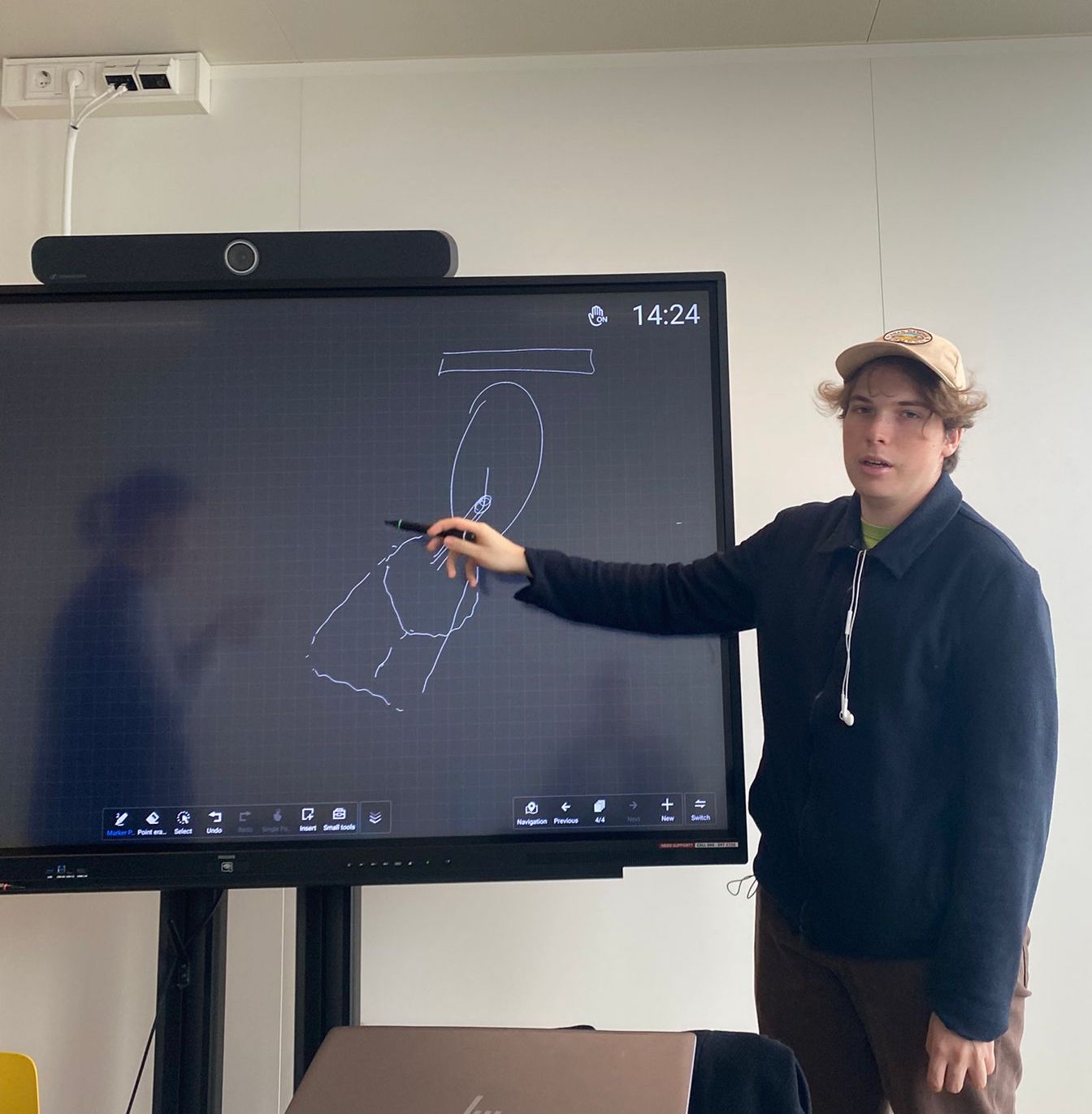
Trying to explain rack and pinion gear mechanism idea to group mates
Creativity & Aesthetics
Aesthetics in product design sits at the crossjunction of utility and beauty: every aesthetic choice needs a reason. The course Aesthetics of Interaction taught me this, showing that a product becomes an experience through direct communication with its user, rather than staying a mere ‘thing’. In my first year, I was naive: I jumped straight into building technology without planning the interaction first. I vividly remember receiving coaching during CBL2 that recommended my group focus on the experience of our prototype rather than the hardware and technology, as we had tried to bite off more than we could chew. It took Aesthetics of Interaction for that lesson to truly click: good interaction has to be foreplanned, every moment and point of feedback mapped out before a single line of code is touched, or the aesthetics just justify the technology after the fact. I've taken this to heart, and it has changed my impression of design even as a trained design engineer: designing is about mixing utility with more human factors like beauty and interaction. Now I treat foreplanning the experience as the first step, before any technical execution begins. To me, creativity means a story behind every sharp edge or smooth curve, well beyond something merely ‘nice’. That belief in direct communication with the user ties this closely to the User & Society expertise area, where that communication gets tested with real users.
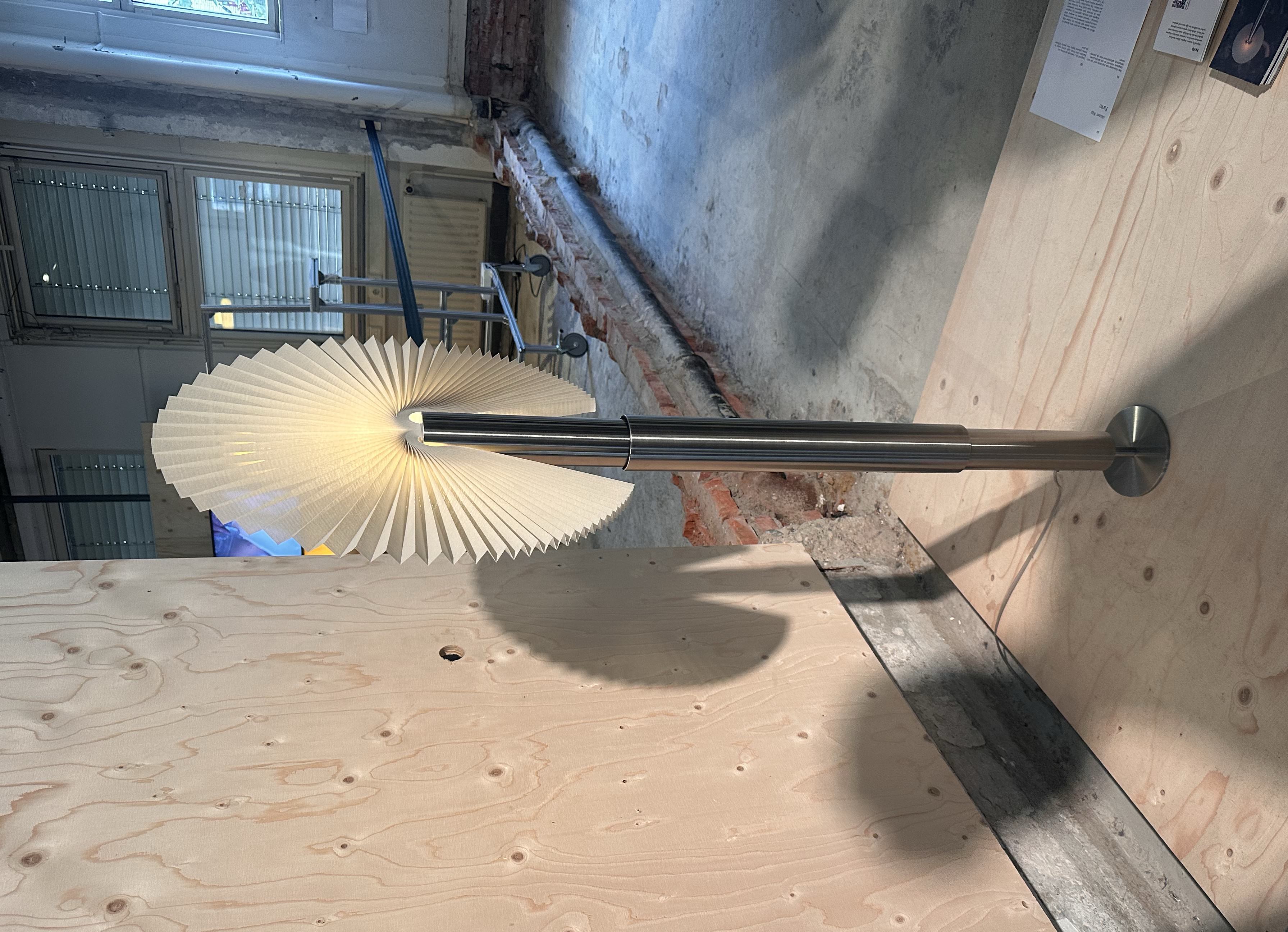
Interesting interactive fan-like lamp by Jelmer Nijp that I found at DDW '26
User & Society
User testing and human-centred design were taught as concepts in year one; in year two, I applied them directly through user feedback and interaction psychology. In CBL3, our project challenged the status quo of autonomous driving by keeping the driver comfortable and secure during the ‘hands-off’ period. Testing low-fidelity prototypes of our tactile interface showed that the sensitivity and size of each tile was key to a feeling of direct car-to-human communication. User studies can feel dull, but I've learned they're essential: I'm stubborn about my first idea, and this process helps me ‘kill my babies’ more easily while genuinely taking in new perspectives. That same humility, setting aside my own conviction for other people's input, echoes directly back to the Business & Entrepreneurship expertise area.
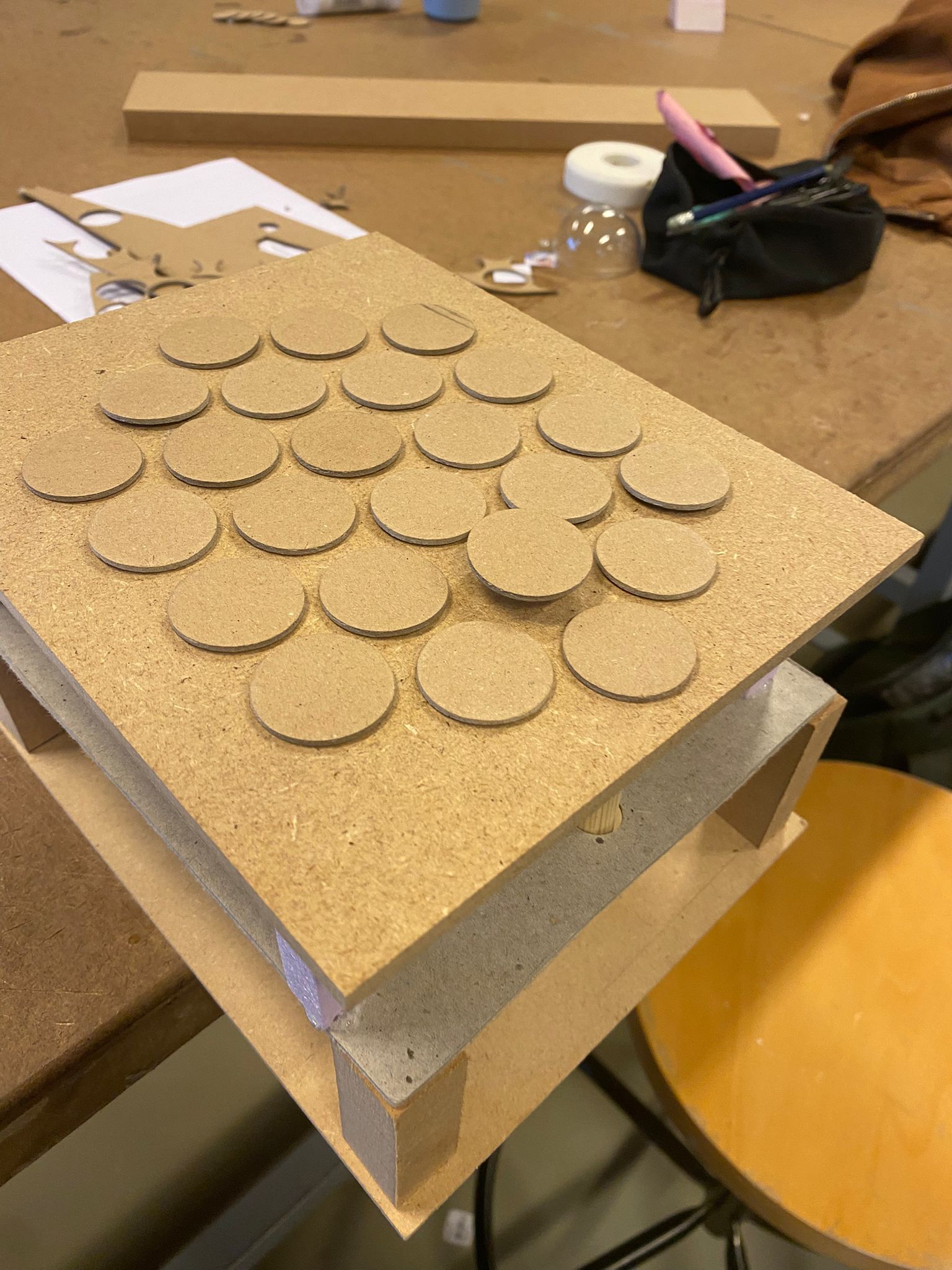
Low fidelity prototype of Pulsedrive for user-testing
Math, Data & Computing
AI is changing math, data, and computing fast. I've learned to treat it as a tool to work with deliberately, rather than an instant solver or something to avoid. TA-ing the first-year course Making Sense of Sensors taught me to explain code to students with little programming experience, in an age where syntax can feel meaningless, and to navigate students over-relying on AI without shaming them for it. That made me more confident conveying information while staying empathetic. I now use AI efficiently in my own programming too, as a ‘syntax’ agent: I give the task and context, it writes the code, much like a typewriter replaced the pen. Treating AI as a tool rather than a replacement for judgement mirrors the same principle in the Creativity & Aesthetics expertise area, every decision still needs a deliberate reason behind it.