George Nosal — Methodology
How
it gets
made.
My
Process.
Research
Research is not a phase, it's the entire practice compressed into its most concentrated form, before a single line is drawn. Research is my foundation for critical evaluation, the basis that informs my decisions.
Making
experimentation of form, explicitly linked to human interaction, with utility as a priority.
Function
An object built for a utilitarian function has stronger purpose than something meant only to be looked at. I believe in focusing on function and pushing boundaries with innovation yet to be explored.
Personal Development & Vision
Where
this is
going.
Identity
I strive to embody my work through shared human experience, with a steadfast focus on interaction and fluidity. Design is a passport, not a pedestal, an opportunity to unlock doors, existing in a constant, ever-changing state of flux.
As Marcel Duchamp put it, "Art is a game between all people of all periods." What Dieter Rams and associates considered the height of functional, utilitarian industrial design in the 1970s might now seem boring and tasteless, tastes change, cultures change, design changes.
My background is multifaceted, perhaps even perplexing, I believe my culture is entirely my own, defined by what I value as my cultural norm. Having lived in nearly eight countries, I've absorbed different cultures through each chapter of my life, resulting in a unique cultural concoction that can only be defined by my lived experiences.
Consequently, I believe my design practice must also be fluid and ever-changing, marked by the friction of diverse perspectives and the scars of unlearning my own biases. To me, being a designer means having the courage to be uncomfortable, the stamina to wander into unfamiliar territories, and the vulnerability to let those experiences rewrite my creative DNA.
I don't seek to impose a singular, recognizable "hand" onto the world, instead, I aim to be a fluid translator. My identity is found in the transition itself, in the ability to move between cultures, disciplines, and ideologies without the weight of ego. I am a builder of bridges, understanding a bridge is only as strong as its connection to the banks it joins.
My most profound solutions are discovered in liminal spaces, intangible areas that demand exploration through rigorous research and first-hand experimentation. My process requires living within and throughout the context, driven by genuine experience and interaction. Ultimately, I want to imbue my work with real impact: starting from contextual understanding, then experimenting with form explicitly linked to human interaction, resulting in a function that exceeds previous explorations and proves innovation is the fuel that sparks creativity.
Vision
Design, for me, has never been a fixed discipline. My vision is to become a design leader who transcends conventional boundaries by fusing intercultural insights with technological advancements, establishing a creative studio where innovation and tradition coexist, fostering designs that meaningfully impact society, optimise efficiency for utility, and specialise in implementing cultural insights for a greater good.
Product design itself is moving in this direction. According to Yousif and Ramirez (2024), cultural adaptation should be treated as a core step of the design process, addressed from the outset in a proposed process model for culturally-informed product design in global markets.
A Mini Cooper has a distinct British look, sleek yet quirky, while a Japanese Nissan Cube is strikingly Japanese, boxy with rounded rectangular edges, these design choices reflect a culture's design language, preferences, environment, history, and people.
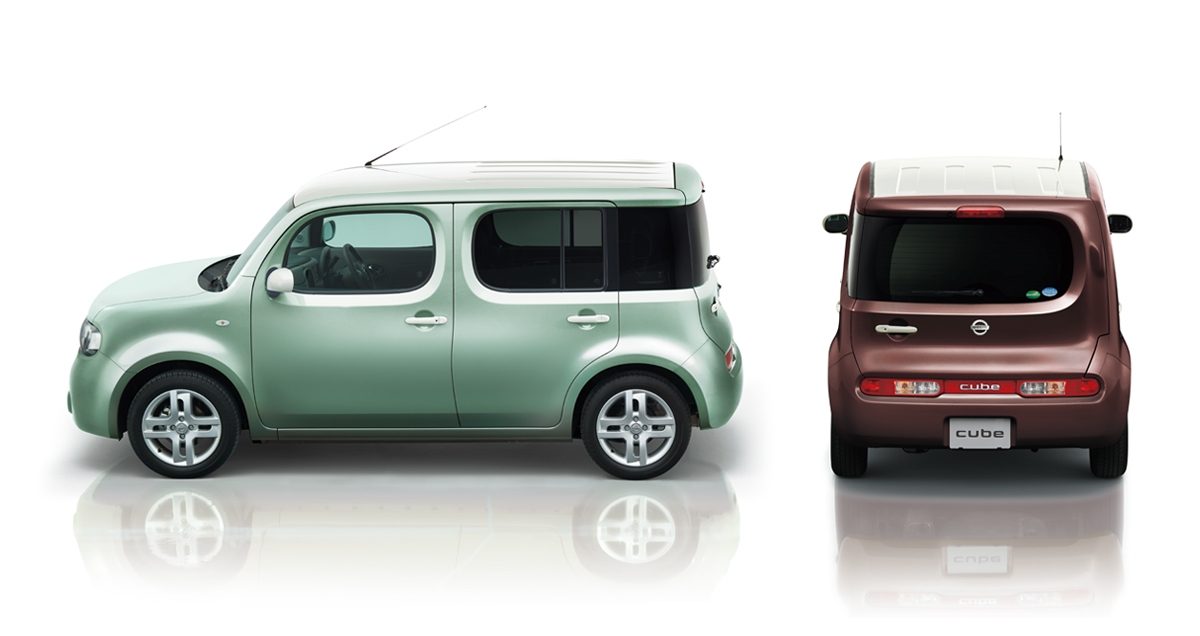
Nissan Cube Z12, Nissan Heritage
As the world continues to globalise, I want to delve deeper into creating systems of design inclusivity through a supply chain and design modularity perspective, for example, how should a Laotian or Peruvian automobile look? How should household appliances and other technologies properly adhere to their cultures and preferences? Before committing this as my Bachelor End Thesis, I'm testing its feasibility by reading the existing literature on culturally-adaptive manufacturing. If it holds up, I want to shape my BEP around a similar model applied to supply-chain modularity, before ideally exploring a venture specialising in this field.
Reference
Yousif, T. M., & Ramirez, M. (2024). Culturally informed product design for global markets: A process model. Alam Cipta: International Journal of Sustainable Tropical Design Research and Practice, 17(2). https://www.researchgate.net/publication/387574590_CULTURALLY_INFORMED_PRODUCT_DESIGN_FOR_GLOBAL_MARKETS_A_PROCESS_MODEL
Goals
- Being Team Lead of Team IGNITE next year I will Use methods from Design Innovation Methods, to build a stakeholder union map early in the season to surface each partner's motivations and dependencies before they stall progress the way multi-partner coordination has in the past, draft a tailored Value Proposition Canvas per sponsor segment so my pitch speaks to what that partner actually values, and back every negotiation with a season-long Cashflow Diagram so funding needs and timing stay transparent to my team and partners from the start. I want to do this to minimise the instability and bureaucracy I've dealt with when working with corporations with different intentions and practices.
- To develop my technology and realisation skills, I will learn TouchDesigner and projection mapping fundamentals to design and run a fully projection-mapped dinner party experience in October. Beforehand, I'll work through foundational tutorials covering geometry, video/media playback, and projector calibration, then run at least one full test-mapping session in the dining space to confirm alignment and timing. On the night, I'll run a minimum of three distinct synced visual sequences tied to different moments of the dinner (arrival, main course, dessert), controlled live through interactive sensor-based communication from a TouchDesigner patch, combining technology with interactive aesthetics, a concept that has interested me since doing Aesthetics of Interaction.
- During my B3.1 internship at Lighthouse, I will actively use the placement to build my professional network and establish my name in the lighting and design industry, rather than treating it only as a technical/research experience. I'll have direct, substantive conversations with people across at least three parts of the lighting ecosystem I engage with through Lighthouse, researchers, manufacturers, and practicing designers, documenting what I learn from each, and connect with everyone I have a meaningful conversation with on LinkedIn. I want this experience to build more meaningful relationships in the industry.
- Before I need to formally register my Bachelor End Thesis topic, I'll research and read a range of existing studies on multicultural and culturally-adaptive design within production-line manufacturing, to gauge the general feasibility of this as a thesis direction.